


Foundation models & learning architectures
We develop self-supervised models and neural architectures that learn transferable representations from large-scale brain recordings.
We develop self-supervised models and neural architectures that learn transferable representations from large-scale brain recordings.
We build dynamical models that reveal how neural populations encode behavior, respond to inputs, and support real-time decoding.
We learn from neural images and complementary signals, capturing brain dynamics across subjects, modalities, and timescales.
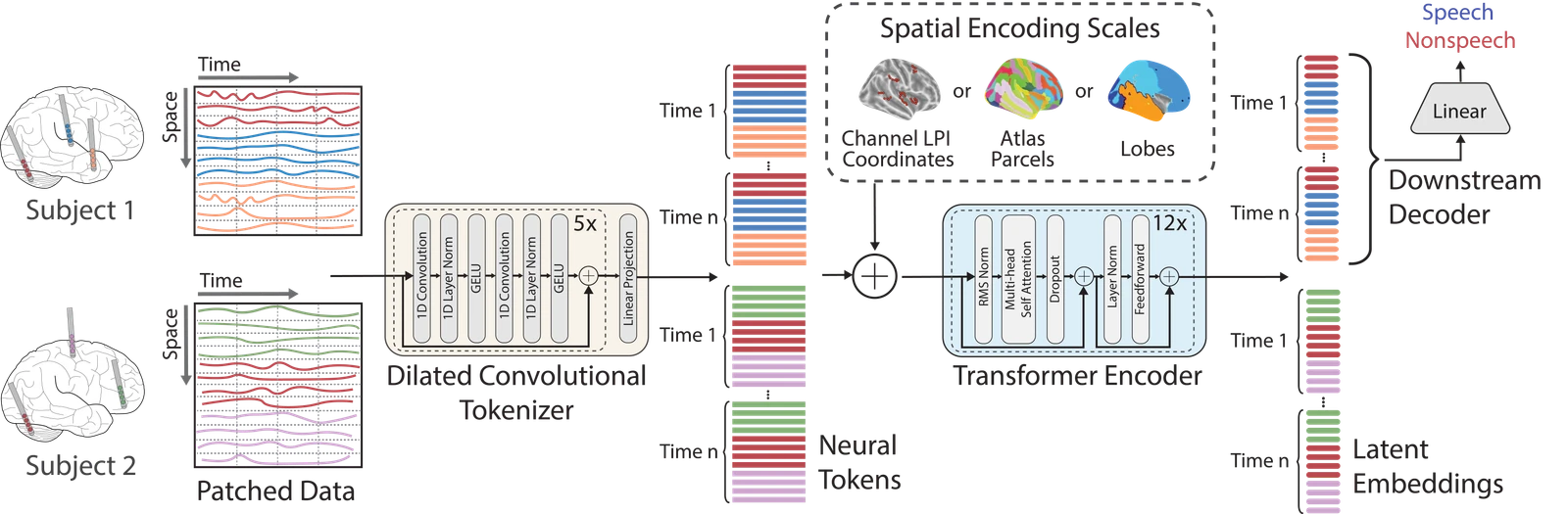
Self-supervised learning from human intracranial recordings, with spatial encoding and masking designed around the brain’s anatomical scales.
Recurrent neural networks separate behavior-related brain dynamics, improving predictions and revealing compact neural representations.
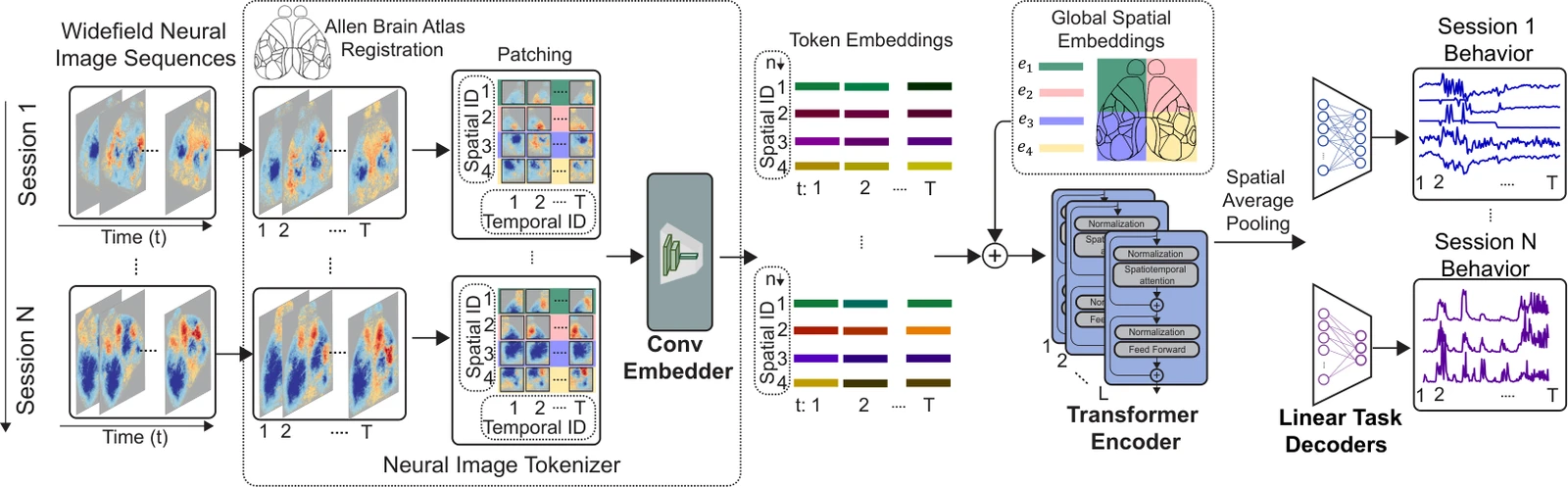
Atlas-aligned representations transfer across subjects and tasks in widefield calcium imaging, supporting behavior decoding and reconstruction.
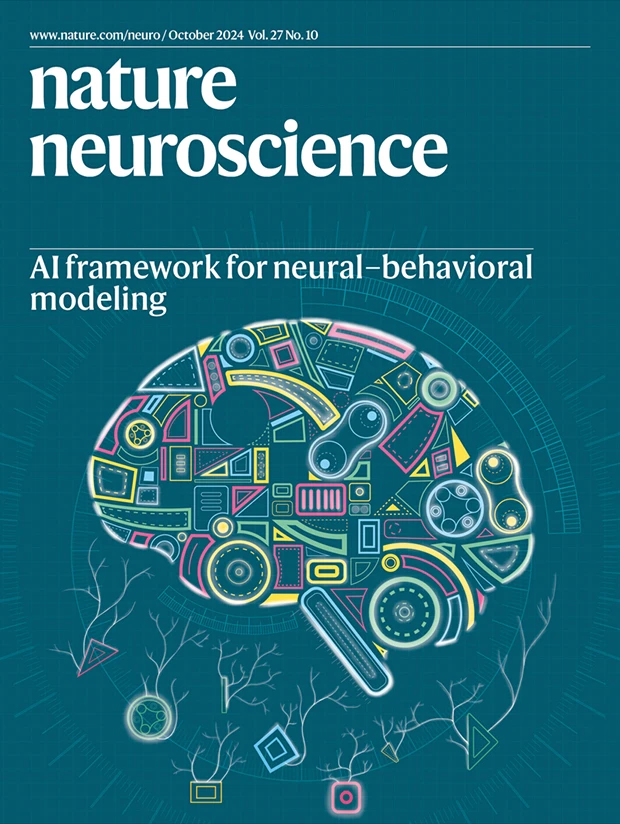
DPAD uses recurrent neural networks to separate and prioritize behaviorally relevant neural dynamics. It improves neural and behavioral prediction, preserves behavior information in low-dimensional representations, and tests where nonlinearities arise in neural-to-behavior transformations.
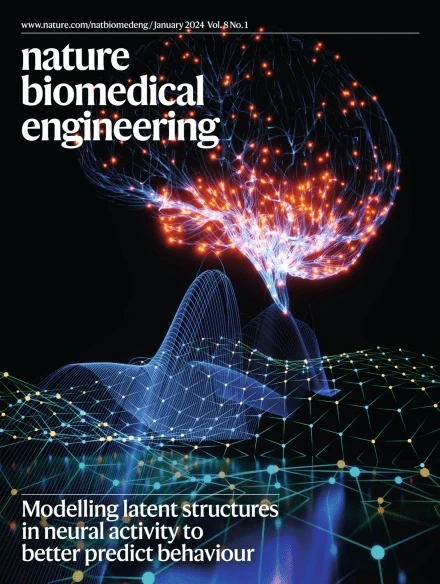
DFINE combines nonlinear neural manifolds with tractable latent dynamics to enable real-time filtering, offline smoothing and inference with missing observations, while improving neural and behavioral prediction across diverse datasets.
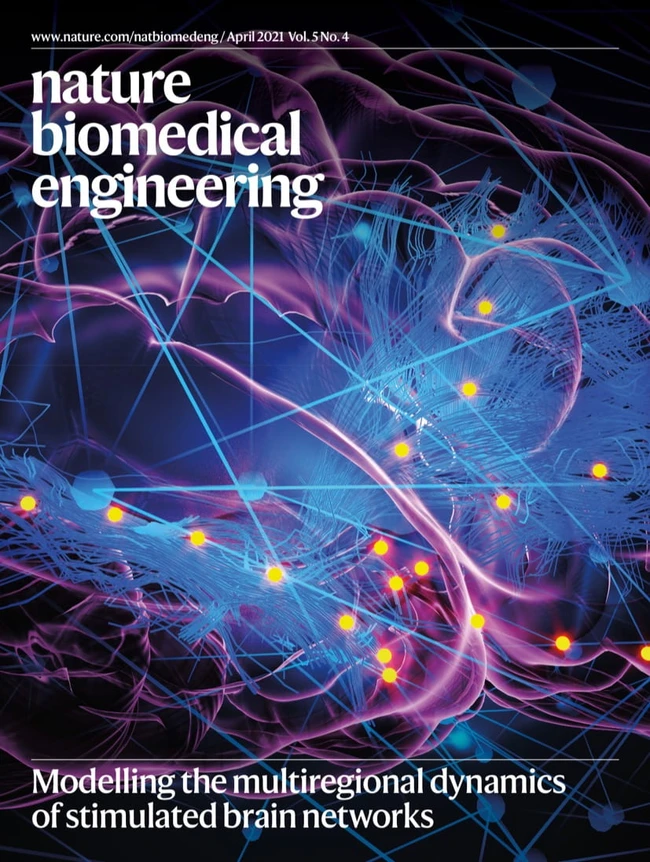
Dynamic input-output models predict how temporally varying electrical stimulation changes activity across brain regions, providing a basis for precise neuromodulation and model-based control.
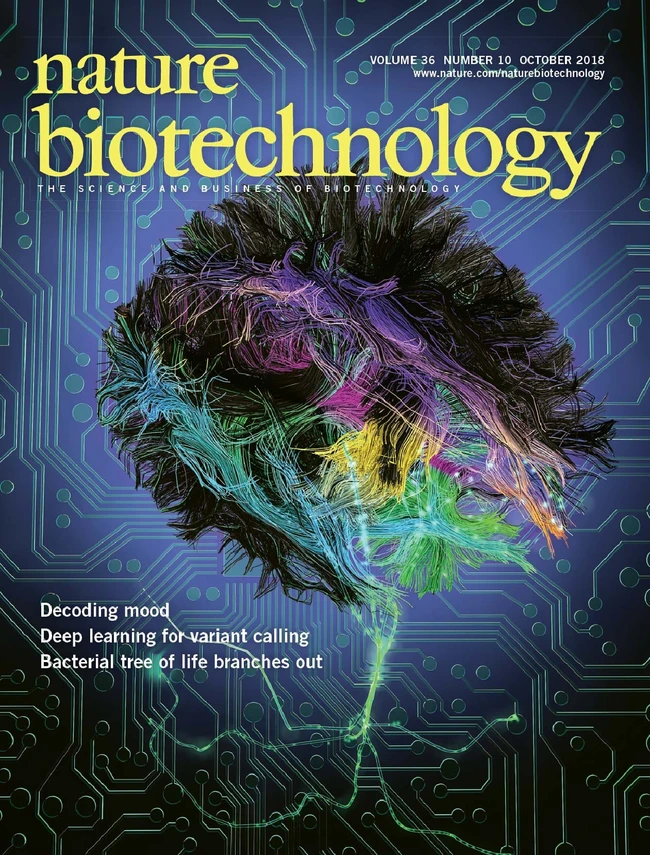
Personalized models tracked mood changes from brain recordings in seven people with epilepsy, using intermittent self-reports for training. The study established initial evidence that distributed neural activity can reveal mood variations over several days.
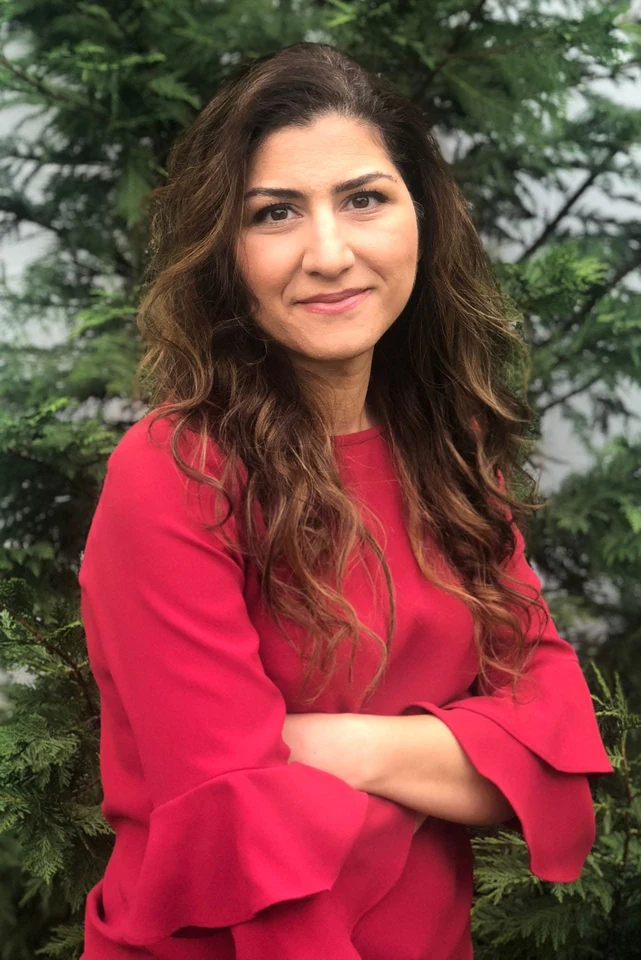
Principal investigator
We bring together researchers in machine learning, engineering, and neuroscience to understand brain activity and develop neurotechnology.
Postdoctoral and PhD opportunities in machine learning,
neural engineering, and computational neuroscience.